


Learning to Read the Ocean - The True Secret of Surfing
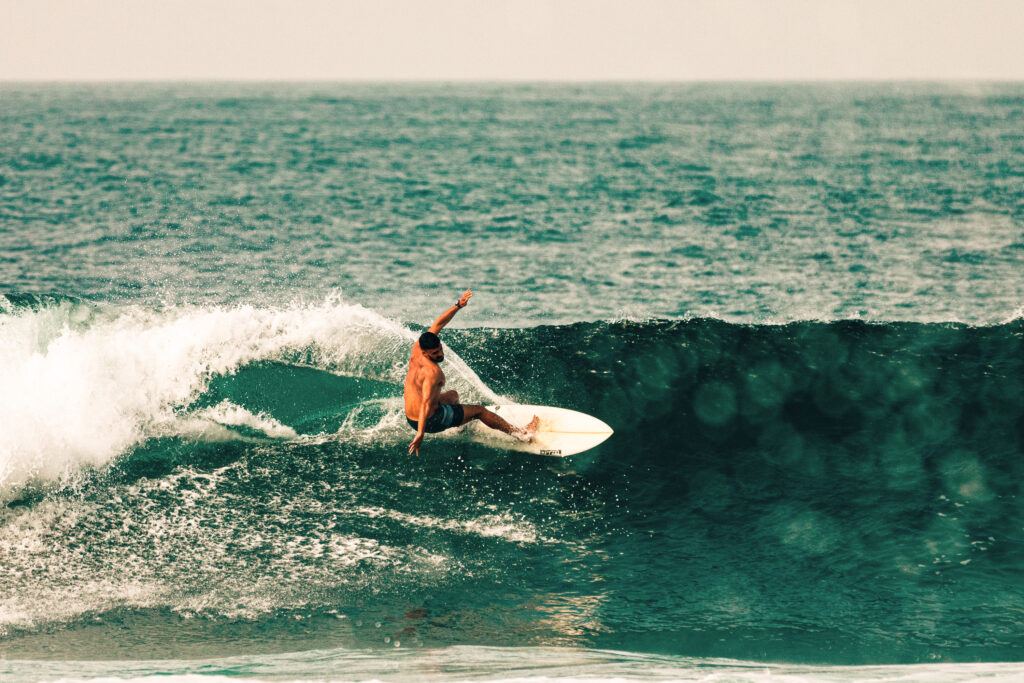
Many people think the hardest part of surfing is standing up on the board. Others believe it requires above-average strength or balance. But the truth is, the greatest secret of surfing isn’t in the body—it’s in the mind. More specifically, in the ability to read the sea.
In the Azores, for example, the sea can change rapidly. This makes knowing how to interpret it even more important. To someone looking at the ocean for the first time, everything might seem unpredictable, but with attention, patterns begin to emerge.
A beginner sees only moving water: crashing waves, foam, currents. It all looks the same. But, over time, you realize that the sea is far from random. This learning becomes even more evident in places with more demanding conditions, such as the Azores.
Reading the sea starts before you even enter the water. You stay on the sand observing where the best waves are, where they are breaking, if there are areas with less swell, and how much time passes between each set. This simple observation can make all the difference.
Then, there are the currents. At first glance, they may seem dangerous—and sometimes they are—but they can also be your allies. Knowing how to identify them can help you reach the outside more easily, saving energy and avoiding frustration.
Another essential point is understanding the waves. Not all of them are “surfable.” Some close too quickly, others don’t have enough power. Learning to distinguish a good wave from a bad one allows you to make better use of your time in the water and significantly increase the number of waves you actually surf.
With time, you begin to anticipate. You no longer just react to what is happening; you begin to predict. You know when to paddle, where to go, and which wave to choose. And it is at that moment that surfing changes completely. It stops being chaotic and becomes fluid.
There is a phrase by Alexandre O’Neill that sums up this relationship well:
“There are seas and seas, there is going and returning.”
In surfing, this idea gains even more meaning. The sea is not something to be conquered; it is something you learn to respect and understand. The better you understand it, the more you can flow with it. And, in the end, the most important thing is always the same: returning to land safely and with a positive memory.
Ultimately, learning to read the sea doesn’t happen overnight, whether in the Azores or anywhere else. It takes time, patience, and many hours in the water.
If you are starting out, especially in a destination like the Azores, having local help makes all the difference. Looking for schools with local instructors, such as Azores Surf Holidays, allows you to access essential knowledge about the best spots, wave types, channels, and currents, always adapted to your level.